When the stakes are highest, your message has to land.
Training for leaders and communications teams who have to inform, reassure and lead under pressure. We prepare you for the moments that define reputations—before the cameras arrive.
The Red Team approach
Prepare for tomorrow's storm—or respond the instant it lands.
We use decades of experience covering politics, criminal justice and business, a deep network of working journalists, and a Red Team process that attacks your message before anyone else gets the chance. Sometimes you cannot head off adverse coverage. Often you can get ahead of the headline. The difference is almost always speed.
Red Team pressure-testing of your message and your vulnerabilities
Rapid-response message development against a real deadline
News-industry insight from working network journalists
Multi-platform strategy so your response reaches every audience
Today's news cycle demands a fast, accurate response and visible accountability—while your context still has to break through the noise and reach the people who matter to you. We train you to do both at once, in the same statement.
What you'll learn
Crises move fast. You move faster.
Six capabilities, practiced out loud rather than explained on slides. Every module ends with you saying the words, on camera or on the record, and hearing what landed.
01
Message discipline
Lock in the core message and avoid the traps that turn a hard day into a permanent headline. Complete sentences, no jargon, nothing you would not want quoted alone.
02
Stakeholder mapping
Decide who hears what, when and how—employees, board, investors, regulators, customers, families, then media. Staff should never learn about their own organization from the news.
03
On-camera control
Stay calm, concise and credible under hostile questioning. The usable answer is about eight seconds long, so we practice until yours is that short and still true.
04
Rapid response
Build a workflow that lets you act in minutes rather than hours without sacrificing accuracy: who drafts, who clears, how long the loop takes, what goes out first.
05
Tabletop exercises
Rehearse realistic scenarios with your own team so the first real test is not the actual event. Incomplete facts, a live clock, and a written score afterwards.
06
Trust repair
Frame accountability, outline the action you are taking, promise a follow-up—then keep it. Staying out of mud fights is a skill, and so is knowing it is fine to say no.
01
Custom
Executive & team workshops
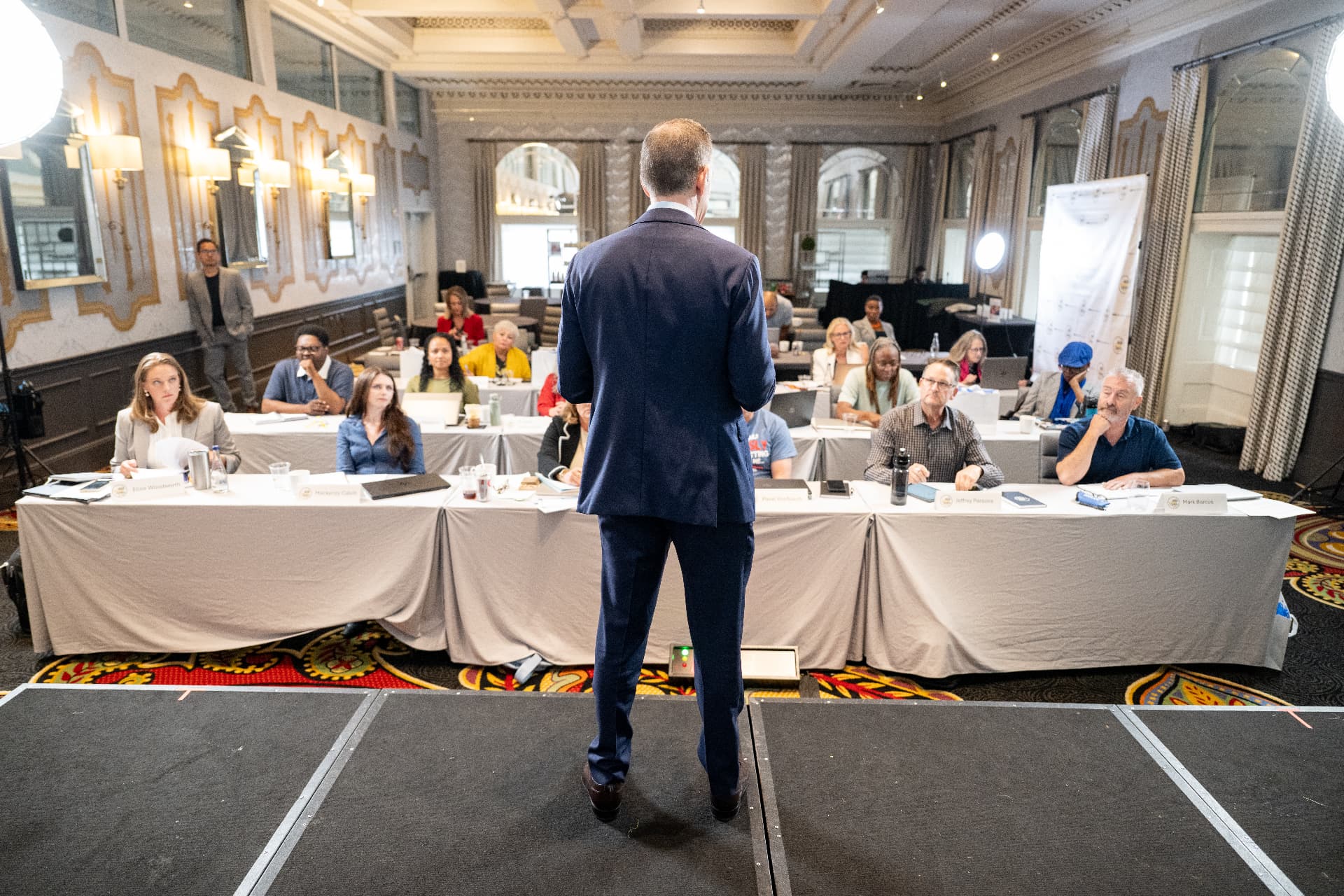
We come to you. A half or full day built around your actual risks, your actual spokespeople and the questions you would least like to be asked. On-camera practice, playback and a candid debrief.
Scenarios written from your real vulnerabilities
On-camera practice with immediate playback
Spokesperson-by-spokesperson feedback
Written recommendations afterwards
02
Rehearsal
Tabletop exercise
Ninety minutes to three hours, no slides, no audience. Decision-makers in the room get a scenario with missing facts and a deadline, and we score what happened against your written plan.
Real decision-makers, not delegates
Incomplete facts on purpose
Scored against your plan
After-action report with named owners
03
Ongoing
Fractional advisory retainer
Training that does not end when the room empties. A standing line to strategic counsel for the next difficult statement, the next reporter call and the next decision that cannot wait for a meeting.
On-call counsel when something breaks
Statement and release drafting
Message review before you publish
Periodic refreshers for new leaders
04
Immersive
Media Mastery bootcamps
For entrepreneurs, founders and thought leaders, our sister brand runs multi-day, studio-based bootcamps in Washington, DC—intensive media training, on-camera practice and crisis drills in a real TV studio.
Multi-day, studio-based format
Group coaching community and live calls
Storytelling and pitch workshops
Private coaching available
Proof
Rehearsed, then reported.
At Furman University, tailored crisis communications training and a tabletop exercise put university leaders and campus police in one room with a scenario that had incomplete facts—and a clock running on it. Findings and recommendations followed in writing.