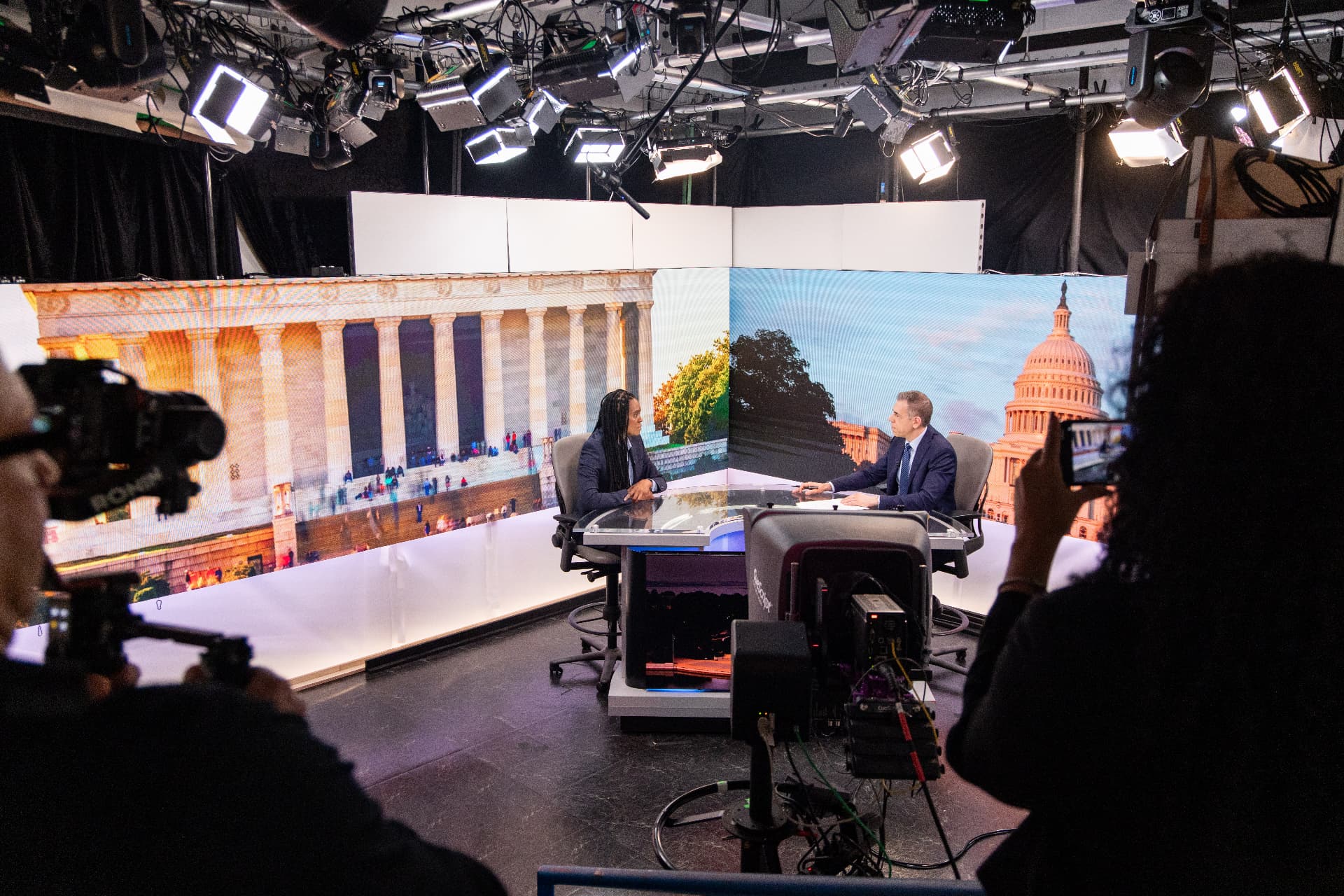
Sit down in front of a camera, a reporter or a room and stay in command of your message—even when the questions get hard.
01
What you walk out with
You practice real interviews on camera with a former network correspondent, then watch the tape back and fix what the audience actually notices.
Three key messages, built to survive follow-up questions
Answers in complete sentences—because the question often gets edited out
A plan for the question you dread, without ever saying "no comment"
On-camera presence: posture, pacing, eye line on the reporter and not the lens
02
The ground rules we drill
Most bad interviews are decided before the first question. We rehearse the habits that protect you in the moment.
Set attribution up front: on the record, on background, deep background, off the record—and what each one really costs you
Stay in your lane: you are the expert on your work, not on everyone else's
When you don't know, promise a follow-up and ask their deadline—then beat it
Stay out of mud fights: respond to the facts of a claim, never the propriety of who said it
It is fine to decline an interview—and keep the door open for the next one
03
Who it's for
Founders, executives and senior leaders who will be interviewed, questioned on stage or asked to speak for their organization—especially those who have never been formally trained.
04
How it runs
A half-day or full-day session in a professional studio near the White House, at your office, or as private one-on-one coaching. Small groups only, so everyone gets time on camera.